
Why around age 7?
By this age most children have a mix of baby and adult teeth, and the first permanent molars have usually come in. That makes it possible to spot developing bite, spacing or jaw-growth concerns while growth is still underway.
Early intervention
A first orthodontic check around age 7 lets us monitor growth and step in only when timing makes treatment simpler and shorter.
Phase I
The American Association of Orthodontists recommends a first orthodontic exam by age 7. At that visit we look at facial development, crowding, crossbites, open bites, airway, tongue position, and swallowing habits. Catching those early lets us guide jaw width and growth patterns instead of working against them — and every Phase I plan is built for the individual child.
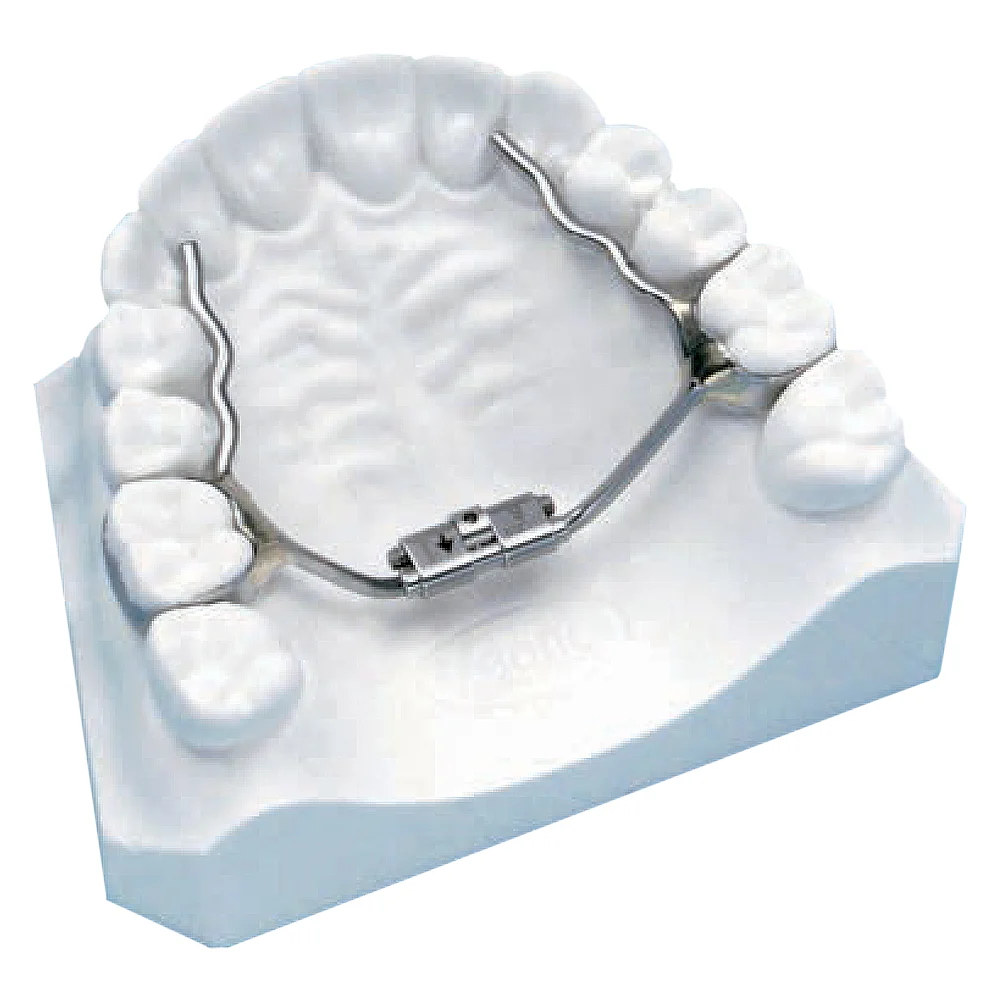
Expanders and interceptive treatment that use a child's growth rather than working against it.
Many children simply need monitoring at first. If treatment can wait — or be made shorter by waiting — we'll tell you that instead of starting early.
Early evaluation
Around age 7 is a good time for a first orthodontic check-up — usually not to start treatment, but to see how the teeth and jaws are developing.
By this age most children have a mix of baby and adult teeth, and the first permanent molars have usually come in. That makes it possible to spot developing bite, spacing or jaw-growth concerns while growth is still underway.
The doctor examines your child's teeth, bite and jaw growth and explains what they see in plain language. If nothing is needed yet, we'll suggest when to check again. You can read more about what happens at a first visit.
Early treatment may use an appliance to guide jaw growth or make room for adult teeth. Many children will still need a second phase later, often with braces in the teen years. Costs are explained at the consultation — see investment and insurance.
A full exam and a plain-language plan - with no obligation to begin.